AI Driven Traffic Strategies Every Trucking Company Needs Now
See how AI driven traffic strategies help trucking companies cut fuel costs, dodge congestion, and hit delivery windows with real-time predictive routing.

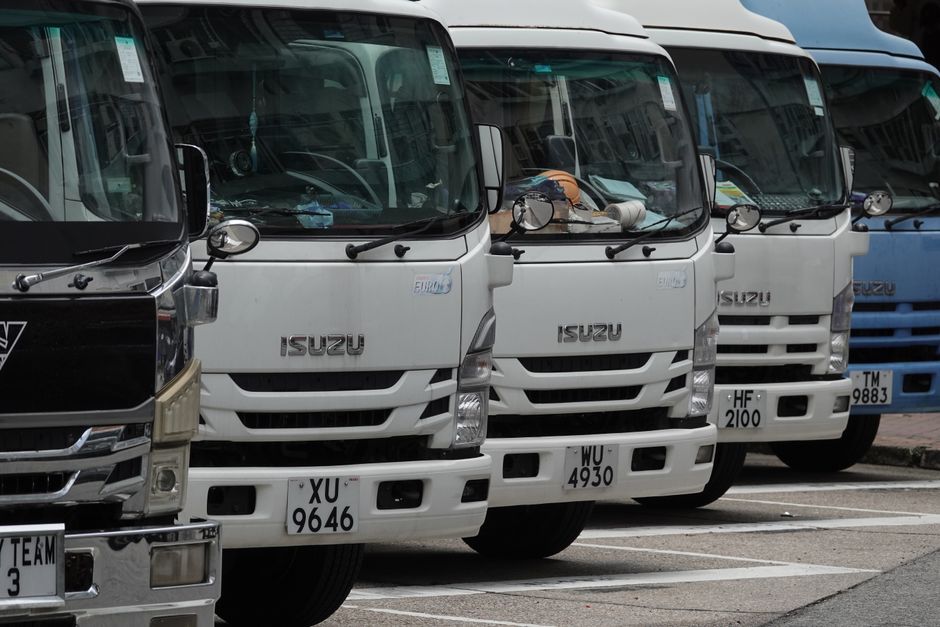
Every trucking dispatcher already knows the feeling: a clean route on paper, then a dead stop behind a jackknifed trailer forty miles from the delivery window. AI driven traffic strategies exist to kill that feeling, and trucking companies that ignore them are basically paying a congestion tax on purpose. This is what actually works when you swap static maps for live, predictive routing.
Key Takeaways (the short version)
- AI driven traffic strategies help trucking companies dodge congestion, save fuel, and protect delivery windows.
- Real-time traffic management runs on live data feeds, not yesterday's traffic patterns baked into a static map.
- AI traffic controllers at intersections and highway on-ramps are starting to talk directly to connected fleets.
- Predictive rerouting beats reactive rerouting for cutting fuel burn and protecting driver hours.
- Fleets that treat AI routing as a one-time install instead of an ongoing strategy leave savings on the table.
Why Can't Trucking Companies Ignore AI Traffic Management Anymore?
Because every idle minute now costs more than it did a decade ago, and static routing was never built to react to a road that's changing under the wheels. Fuel, driver hours, and shipper contracts have all gotten less forgiving, and a route plan that ignores real-time conditions is a plan built to fail.
Fuel costs and driver shortages mean an idling truck bleeds money that a thinner-margin fleet can't shrug off anymore. Add hours-of-service rules into the mix and a single traffic jam can cost the entire delivery slot, not just an hour, because the driver runs out of legal hours before the load makes it to the dock.
Groups like the American Transportation Research Institute have tracked congestion draining serious money from trucking budgets for years, but the exact figures shift annually. Check their latest freight congestion report for current numbers before you build a business case, not a stale headline.
On top of that, shippers keep tightening delivery SLAs and baking penalties into contracts. Static routing simply cannot keep pace with that kind of pressure. You either adapt in real time or you eat the penalty clause.
How Does Real-Time Traffic Management Actually Work?
It works by pulling live data from multiple sources at once, GPS telematics, state DOT sensors, weather feeds, and historical congestion patterns, then running that data through machine learning models that predict slowdowns before they happen. The system pushes a new route straight to the driver, no dispatcher phone call required.
That prediction piece is the whole game. A model that's been trained on historical congestion patterns for a given corridor can flag a probable slowdown before a single sensor even registers it, because it knows that particular stretch backs up every weekday around a certain hour under certain weather conditions.
Dynamic rerouting then gets pushed directly into the driver app or in-cab system. No waiting on a dispatcher to notice a problem and call it in. That's the difference between reactive and predictive, and it's the difference that actually moves the needle on fuel and on-time performance.
The best platforms don't try to replace your transportation management system. They plug into it. If a vendor is pitching a total rip-and-replace instead of an integration with API access to your existing TMS, that's a red flag worth pausing on.
What Is an AI Traffic Controller and Why Should Fleets Care?
An AI traffic controller is an adaptive signal or ramp-metering system that cities and state DOTs use to adjust green-light timing and on-ramp flow based on real-time conditions instead of a fixed clock. Fleets should care because routing software that understands how these systems behave gets trucks through urban corridors faster, even though the fleet itself never touches the controller.
Some corridors have gone a step further with vehicle-to-infrastructure communication, letting connected trucks anticipate signal timing before they even reach the intersection. That's not science fiction anymore. It's already rolling out in pockets across the country, and it's only going to spread.
Here's why it actually matters for a dispatcher who doesn't care about traffic engineering theory: shaving a few minutes off an urban leg, a weigh station approach, or a queue at a signalized intersection adds up fast across a full day of stops. You're not going to install these systems yourself. But routing software that factors them in gives your trucks a real edge over a competitor still running a dumb map.
How Do You Build an AI Driven Traffic Strategy for a Fleet?
You start by auditing what you already have, because most fleets discover their current TMS wasn't built to accept live data feeds in the first place. From there it's a matter of picking the right platform, piloting it small, and measuring results before you scale it across the whole operation.
Here's the practical sequence that actually works:
- Audit your current setup. Find out if your routing and TMS software can even ingest real-time data, or if it's stuck running on fixed schedules and historical maps.
- Pick a platform with real API access to live traffic, weather, and hours-of-service data. A prettier map interface is not the same thing as a smarter routing engine.
- Pilot on your worst routes first. Your highest-volume or most congestion-prone lane is where you'll see the clearest before-and-after signal.
- Train dispatchers to work with the system, not around it. They need to trust the recommendations but also know when to override them, and you need to track fuel burn and on-time delivery rates before and after the rollout to know if it's working.
That last step is the one fleets skip, and it's the one that actually proves the ROI instead of just assuming it.
What Goes Wrong When Trucking Companies Adopt AI Traffic Tools Badly?
The most common failure is treating the software like it's infallible and skipping the human checks that keep it grounded in reality. A route that looks efficient on a dashboard can still send a truck under a bridge it doesn't clear or into a neighborhood a 53-foot trailer has no business entering.
A few specific ways fleets sabotage their own rollout:
- Leaning on a single data source. Traffic data without weather data, or weather without historical patterns, gives you half a picture and bad recommendations.
- Ignoring driver feedback. If drivers keep flagging the same "optimized" route as a nightmare in practice, that's a data point, not a complaint to dismiss.
- Letting the software ignore hard constraints. Hours-of-service limits, bridge clearances, and weight restrictions are not suggestions, and a routing engine that doesn't respect them is a liability.
- Treating it as a one-time purchase. Traffic patterns shift, roads get repaved, construction zones move. A strategy that isn't tuned continuously starts decaying the day it launches.
None of this means the tech doesn't work. It means the tech is only as good as the process wrapped around it.
Traditional Routing vs AI Driven Traffic Management
Here's the comparison stripped down to what actually changes when you make the switch:
| Factor | Traditional Static Routing | AI Driven Real-Time Routing |
|---|---|---|
| Data source | Historical maps and fixed schedules | Live GPS, DOT sensors, weather, and traffic history combined |
| Update frequency | Set once, rarely adjusted mid-route | Continuously updated as conditions change |
| Response to congestion | Reactive, after the driver is already stuck | Predictive, rerouting before the jam forms |
| Integration with signals | None | Can factor in adaptive signal and V2X data where available |
Look at that "response to congestion" row again. That's the entire argument in one line. Reactive routing finds out about the jam the same way the driver does, by sitting in it.
To put some scale behind why this space is worth the investment, the AI in transportation market has been projected to grow from USD 1.21 billion in 2017 to USD 10.30 billion by 2030, and separate research pegs AI in freight transportation reaching USD 6.8 billion by 2033. That kind of sustained investment isn't happening because the tech is a novelty. It's happening because it works, and the money backing it keeps compounding.
There's also a direct cost argument for fleets sitting on the fence. According to the U.S. Department of Energy, trucking companies using AI-enabled route planning have reported a 10 to 15% reduction in fuel costs. That's not a hypothetical upside. It's a documented range, and fuel is one of the largest line items a fleet has to manage.
The Bottom Line
AI driven traffic strategies aren't a gadget you bolt onto a truck, they're a shift from guessing at routes to actually reacting to the road as it changes. Trucking companies that build this into how they dispatch will keep beating the ones still trusting a map that was accurate three hours ago.
Frequently Asked Questions
Does AI traffic management replace dispatchers?
No, it augments them. Dispatchers still make the judgment calls; the AI just hands them better, faster information.
How much can a trucking company actually save with AI routing?
It varies by fleet size and route density, so don't chase a specific number from someone else's case study. Track your own fuel and on-time data before and after a pilot to get a real answer.
What technology do we need to even get started?
GPS telematics on your trucks and a transportation management system with API access to real-time traffic and weather data. Without that foundation, the AI has nothing to work with.
Are AI traffic controllers only useful for city planners, not trucking companies?
They're built by cities and DOTs, but routing software that understands how those signals behave gives your fleet a real timing advantage in urban corridors.
Is this realistic for a small fleet, not just the big carriers?
Plenty of routing platforms scale down to smaller fleets now. Start with a pilot on your busiest route instead of trying to overhaul everything at once.